Summer 💌 for Workstations?
I tire of debugging trivialities, of fixing baselines post-vendor upgrade cycles
- I don't like Linux. There, I've said it. I say it every day. I use Gentoo when I must.
- I have to use Linux for work. I'd rather use FreeBSD or Solaris.
- I prefer Solaris for my workstations, and a Model M keyboard, or Sun-Type5c
- I don't like dealing with UEFI loaders,
efibootmgr, stub EFI-loaders, dracut, initramfs. I don't usegruborgrubbyunless I am forced to, though I know the low-level nerdery of every single layer of modern boot sequences, often due to obligation more than curiosity these days - it used to be extremely fun, but now too many corps ship trash code (Ai code from IBM's Granite and 5.5-Pro is pretty fuckin' good though, and better documentation than most people I've ever worked with). - I'm tired of debugging unnecessary breakage due to engineers not following standards. We have entire bodies of communities of engineers making standards specifically to avoid regular engineers from having to waste their time dealing with non-standard garbage. Fuckall it's tiring and it's been getting worse every year since 2020. Wake up people!
- SystemD can go back to Guatemala City and stay in the ditch where it belongs.
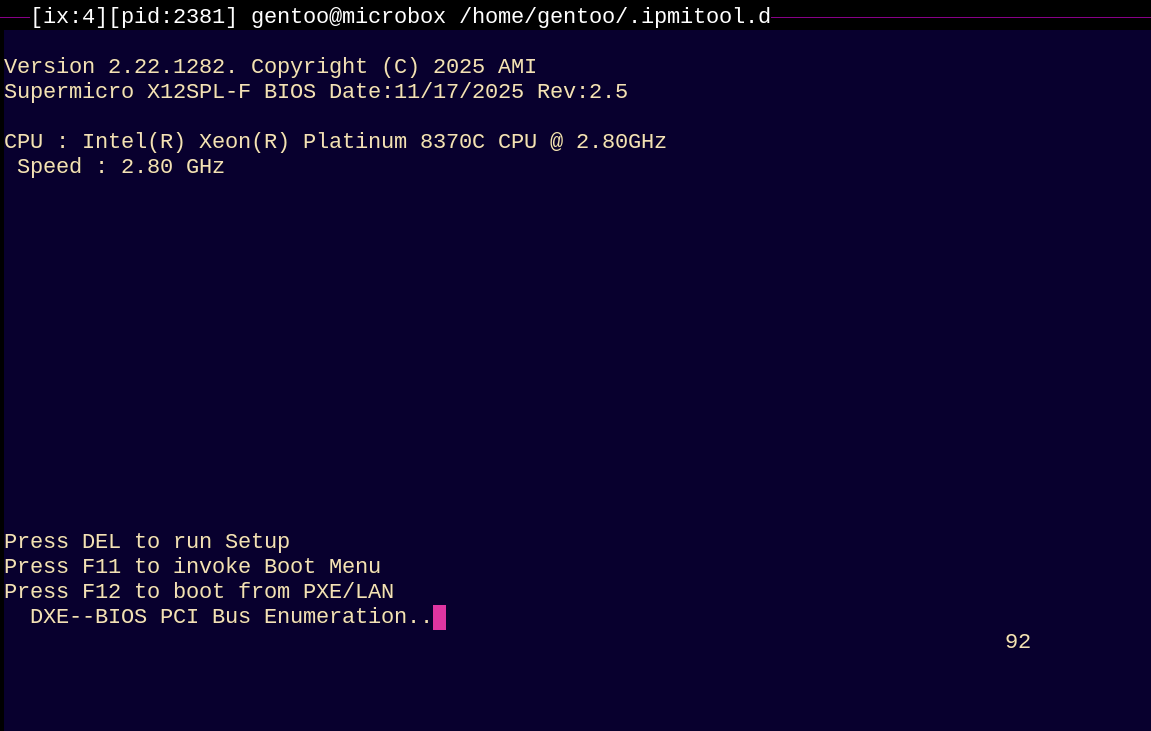
92d+ Uptime on Custom Gentoo Stage4 LiveISO
And that was a decent go on this build; one simply avoids ever using GCC and SystemD – use LLVM/Clang + OpenRC, and.. wow.. it's like 2006 when things worked, Cobalt RaQ was still in the colo by the grids, an E10K or a few hundreds were still in service and would continue to stay online for years to come.
Oh, and admins and engineers didn't avoid UNIX tools or determine ifconfig or netstat had to be "deprecated" (please, fuck off). So, get rid of the trash and then the systems become substantially more stable on the daily. Personally I trust my own ability to run and automate fleets of systems, not a tangled mess of low-hanging-fruit nod-to-redmond that most linux distros are suffered to use (CVE town is so rad, ja?)
92 days of uptime is generally close to mean value, and unfortunately it was ruined by having to upgrade the BMC and BIOS firmware versions due to "reasons". Everything is being upgraded just in case because of the Github CVE in May. It's wrecked so many upstream tools and sites and services and so many people are scrambling as if Log4J had just shit the bed and fell back asleep. But don't worry.. "no customers were impacted" 😂
Anyway, Resuming to Workstations and Stage4
While there have been improvement on recompiles when optimizing test nodes' kernels and enabling accelerators, the CI system for the building stages was upgraded to enable portage to use cross-datacenter distcc (distributed compiling) over a decent 5GbE symmetric fiber from a lab-rack to the colo cross-connect. Then the jobs are spooled off to SLURM nodes, rebuilding thin-LTO, PaX, PAE, ASLR. Very similar to a distributed Poudtierer, but without the memories of Poutine (and I love a good Poutine, especially in a light snowstorm in Banff, at least as much as the Chinese restaurant on the first left into town).
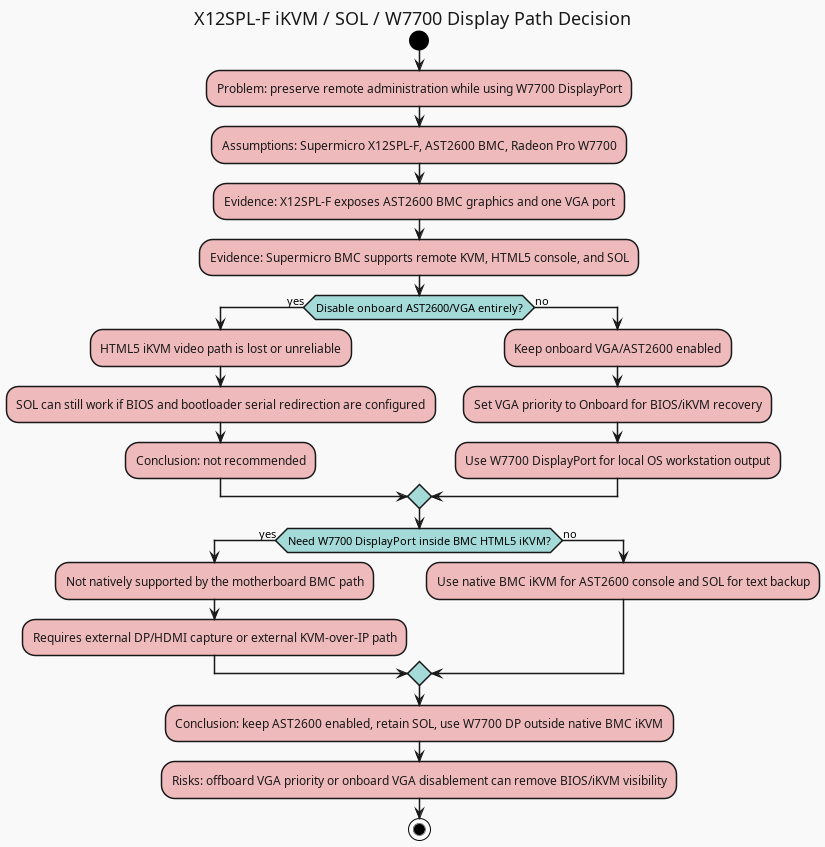
How many times do I need to follow this type of flowchart (made it, wow, so amazing) every time Supermicro releases a new BMC or BIOS upgrade? Dell, you're not much better but at least the release notes are decent and there's the Yum/Deb repo (one of these days I'll put my Gentoo + Dell Driver overlay into a public git repo (not on git/msft-hub.com) for other Gentoo PowerEdge users to more easily remain up-to-date on firmware packages (fwupdmguur does't cover everything, and the last time I trust it not to shit the bed it bricked my Thinkpad X1 Nano - thanks brosefs (am I saying that right? ehh).
fuuuuuuuuuuuuuuuuuuuuuuuuuuuuuuuuuuuuuuuuuuuuuuuuu